 Aermacchi
Sprint CRs
Aermacchi
Sprint CRs
Harley Davidson
Sprint
h-d hd
harley davidson motorcycle flat dirt track racing
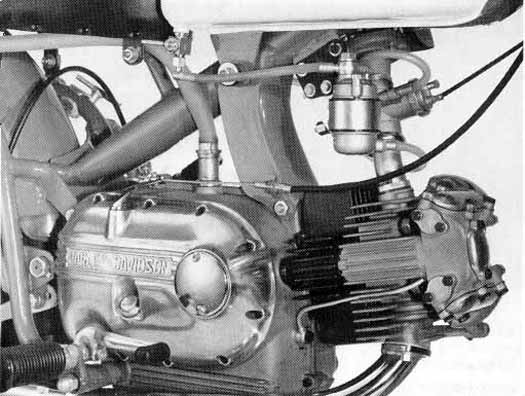
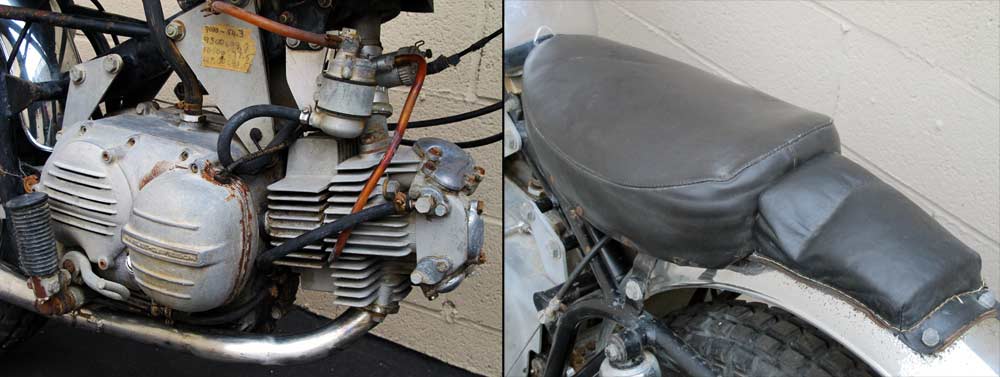
Close up view of the Long Rod Version Engine
which
had the undersquare Bore/Stroke, used a
Wet Multi-Plate Clutch on the Primary Side and had
a 27mm Delorto Carb w/rubber mounted
remote Float Bowl. The later CR Engines had a 30mm
Carb and the Final Imported engines
from 69-70 had 35mm Delorto Carb.
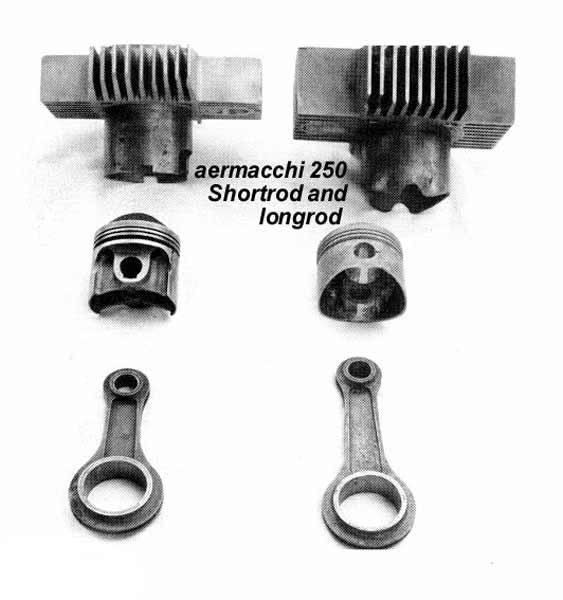
Aermacchi made 2 Configuration Motors for the
CR/CRTT
Sprint. The early engine (1961-65)
was undersquare 66mm x 72mm and referred to as the
Long Rod Motor. In late 65 they
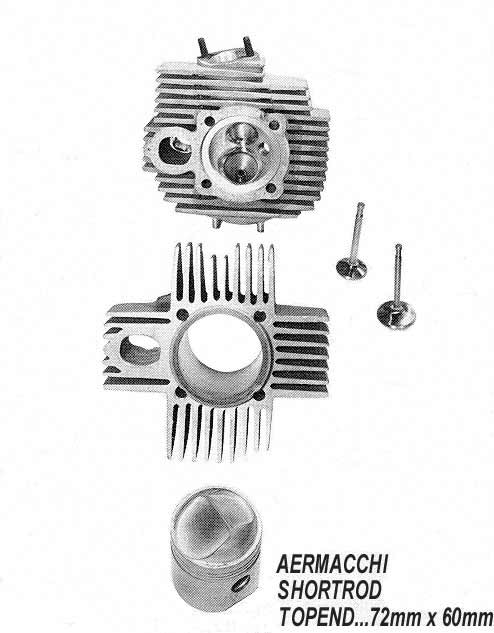
started mfg the Shortrod engine which was oversquare
bore/stroke 72mm x 60mm, had a
Dry Clutch, Bendix Scintilla Magneto and was
available
with a 4 or 5 speed gearbox.
The Shortrod Engine could turn over 10,500 rpm and
was a Superior Engine for long tracks and
Road Racing; however a long rod motor might work
better
on an indoor short course.
Debateable, Either way they had to be detuned to run
on an 1/8 mile or indoor as they had
extremely radical camshafts in the OEM CR
motors.
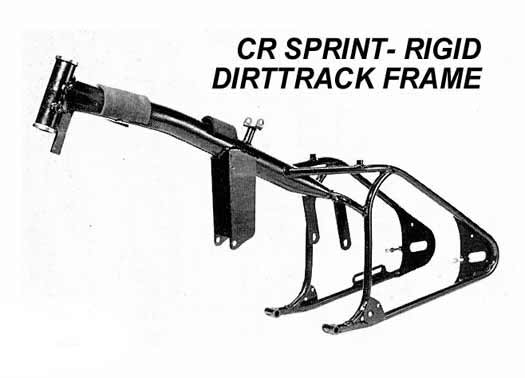
This was the American Built DT Frame that the CR
used.
The Bike was never avaliable
as a Complete Bike, You had to buy it in a Kit Form.
When the Dealer ordered it
you got a Frame, Front Forks, Alloy Racing wheels,
but no Tires. Fuel Tank, solo seat
and rear Fender. Depending on what part of the Year
you ordered it in you might
have to wait for your Engine to be Shipped from
Italy
from the Aermacchi Factory...
In all the years that I have seen Race Results from
these Bikes in DT Races, I have never seen
the word Aermacchi ever used in the Brand name of
the Winners, always HD...
Something Harley is pretty good at, Taking Credit
for something they never Built
but put their Label on (i.e. aka Rotax). Look at the AMA Racing Archieves and all the
Races in the late 70'S & 80'S that were won by
ROTAXS have HD in the MFG Column.
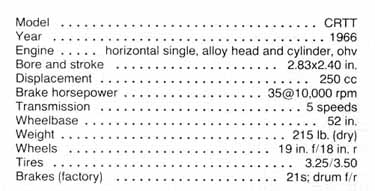
Here is a Factory Spec Sheet for a 1966 CRTT.
Weight
is shown at 215lbs. Now remember the
CRTT is essentially the RRer Model which has Rear
Suspension (shocks) Brakes, etc.
Since the CR used the Spool Type KR Racing Wheels
& Lighter Hardtail Frame You could get
the weight down too or under the 200 lbs mark if you
were resourceful...
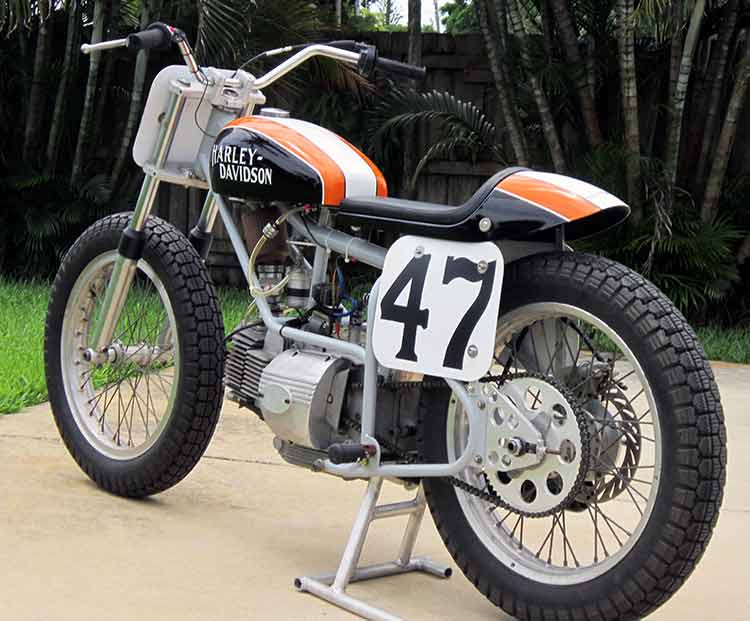
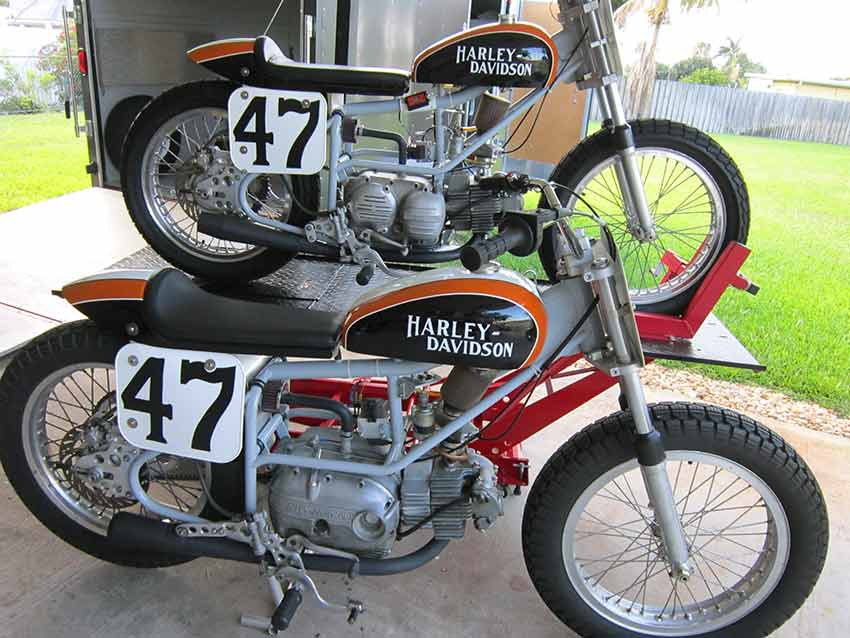
Charlie Seale's CRTTs.
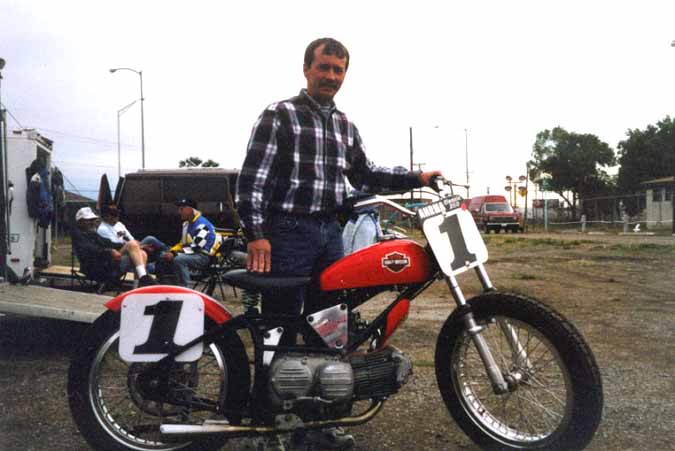
Mike Connell's 1966CR. This is pretty close to what a Factory Kit Bike was
like that had the Shortrod Engine
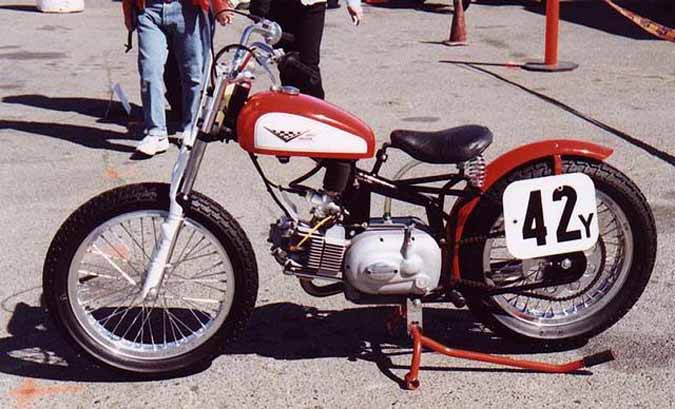
The 42y Bike is also Very Close to what an OEM Kit
bike looked like around that time
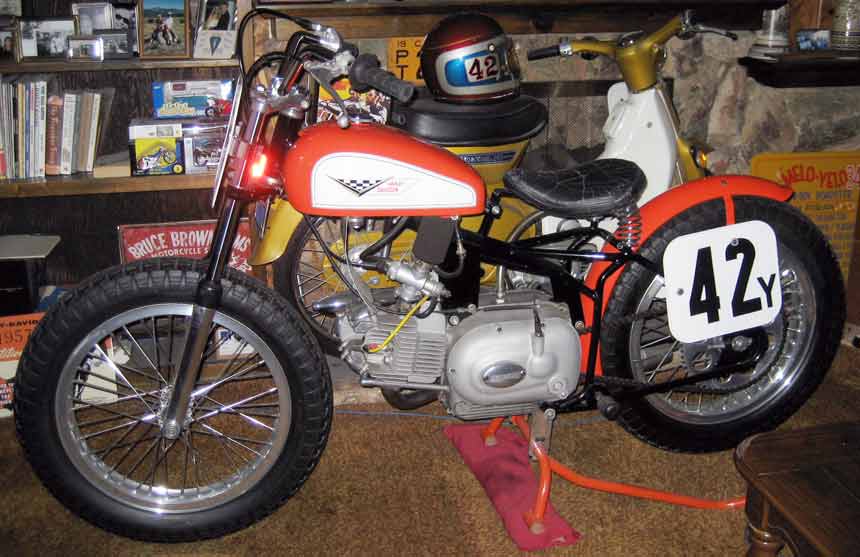
Hey Dennis, read your site many times a day, thanks. Thought I'd let you know, the 42Y Sprint on the Sprint Page is mine...
Never raced that one, but was ridden by Steve Poggi at Del Mar years ago. My old CR, was a rigid Hensley
Trackmaster, rode a ton of indoor races at San Jose, Cow Palace and Santa Rosa...sold it for $300 in early '70's....damn.
Tim Tewksbury
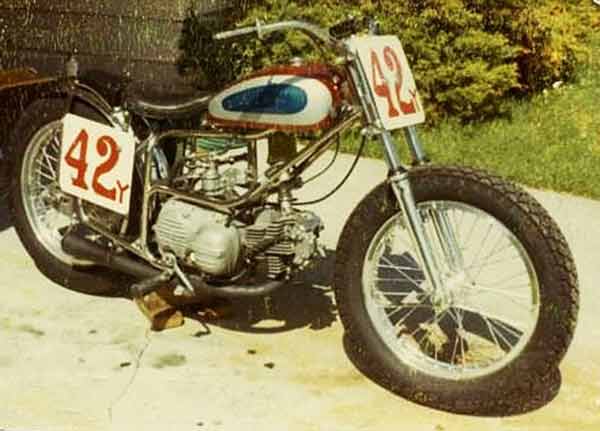
Tim Tewksbury's original Sprint
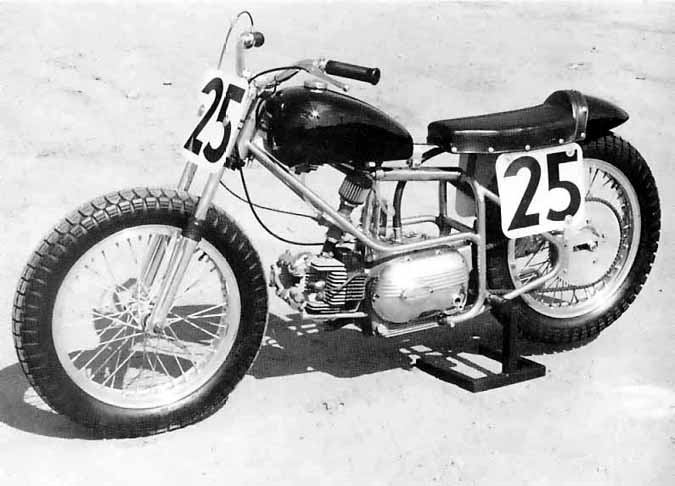
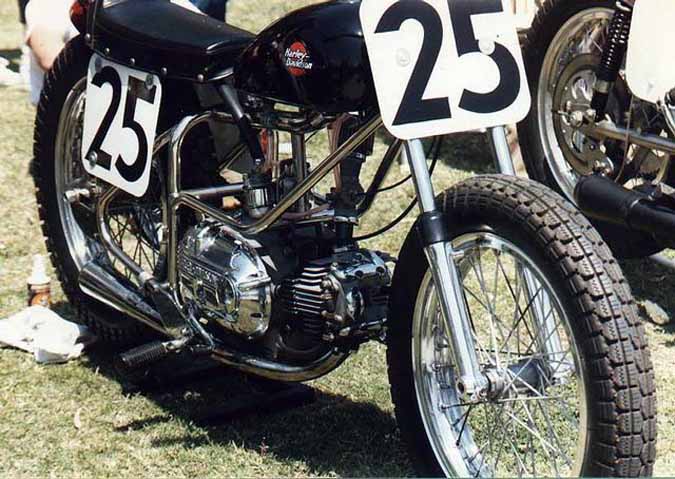
Rod Lake's #25 Cal Rayborn Replica CR utilizing a
Sonicweld/Trackmaster Chromemoly Frame.
The Bike has the Longrod engine which is easily
distingished
by the right side case that doesn't
have the large hump of the Bendix Scintilla Magneto
and vent cover of the Dry Clutch.
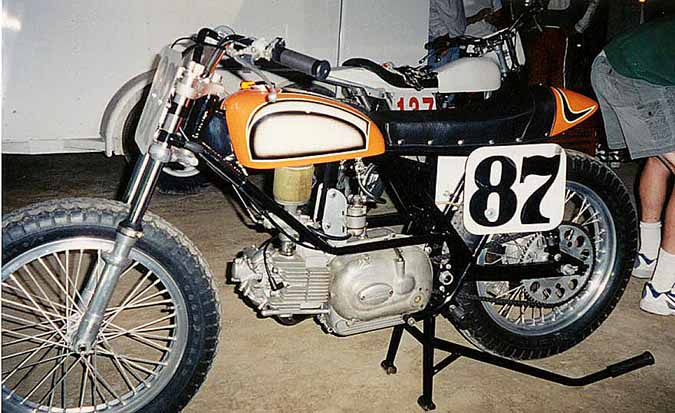
An old 87 Mark Brelsford CR. This bike had a Jim
Belland
Built Frame but still used the Aermacchi short rod Engine.
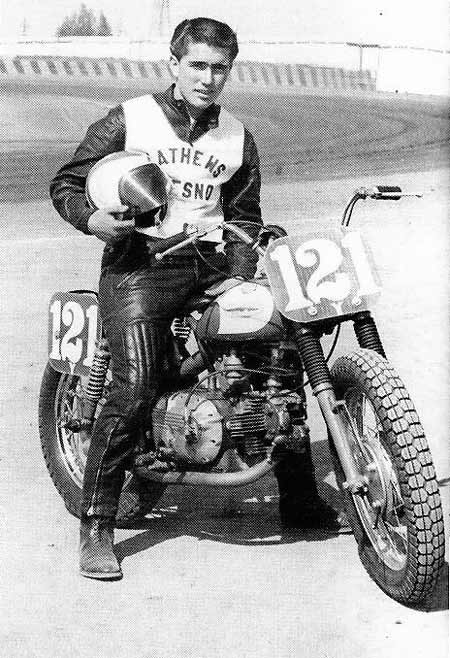
Gene Romero rode a Sprint as a Novice.
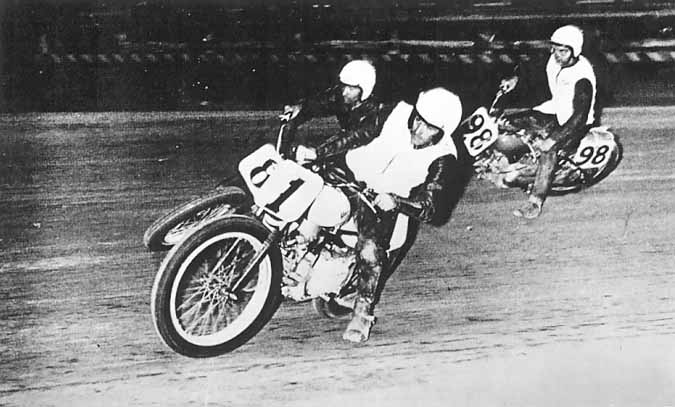
This is a pretty well known Pic at Santa Fe in
1961
where Resweber, Markel & Leonard were all on CR DTers
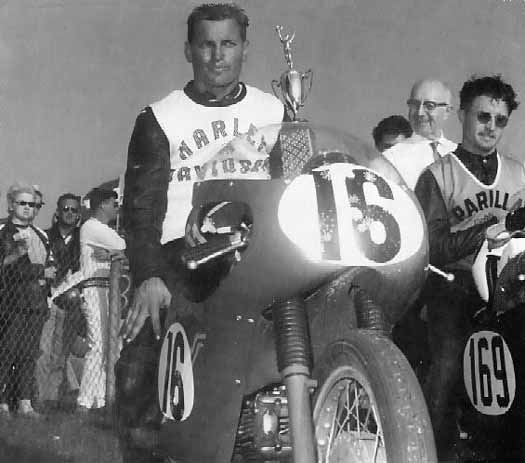
#16 Dick Hammer in the Winner Circle at
Daytona. Dick
won the 1963
Daytona 100 on a CRTT Sprint.
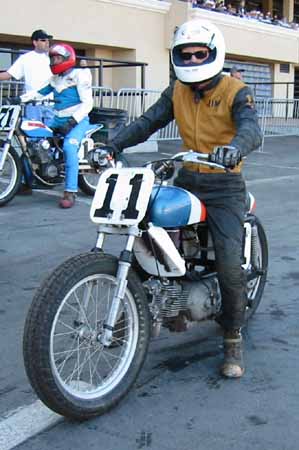
San Diego rider Jim McMurren at Del Mar -
2002
vft
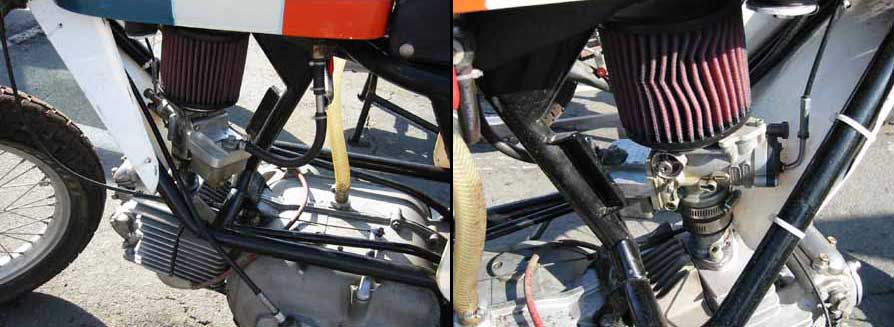
Carb conversion on McMurren Sprint vft
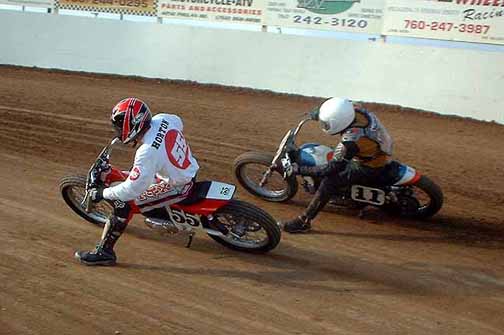
Tom Horton on a Montesa and Jim McMurren on a
400cc
Sprint
at Victorville SCFTA short track - April
2003
vft
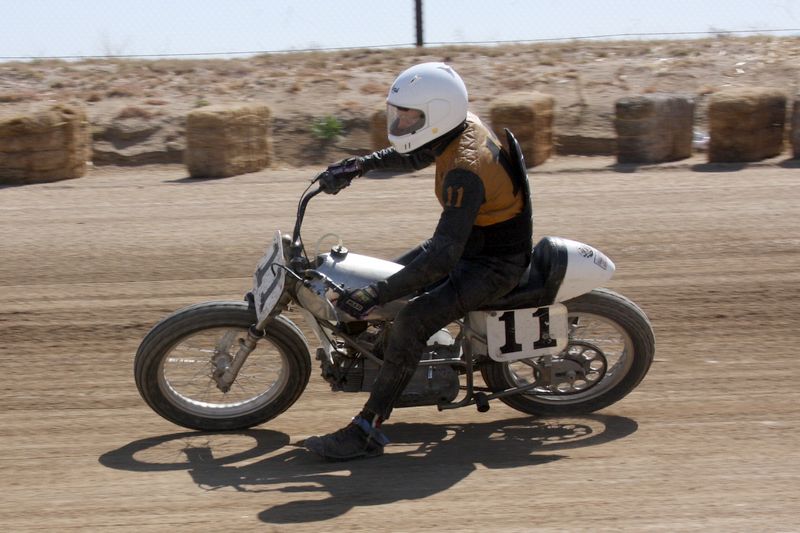
Jim McMurren at Willow
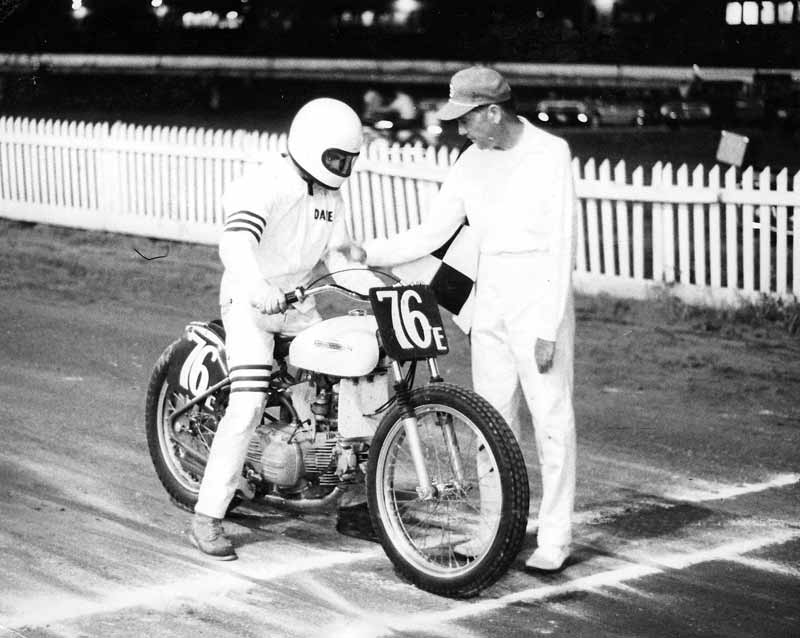
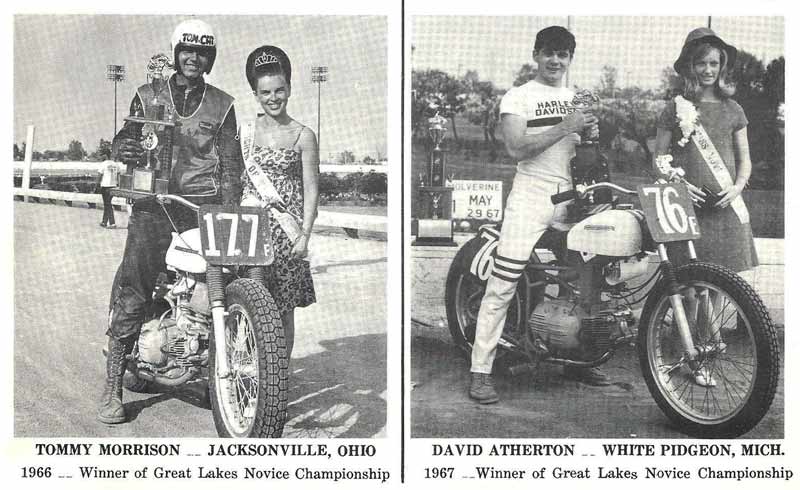
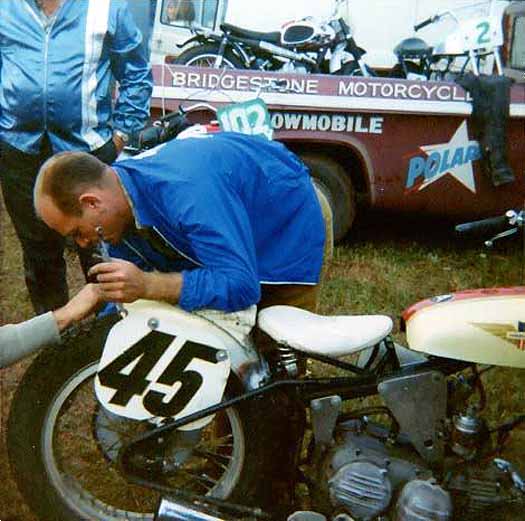
Dave Atherton at Troy, Ohio - 1967.
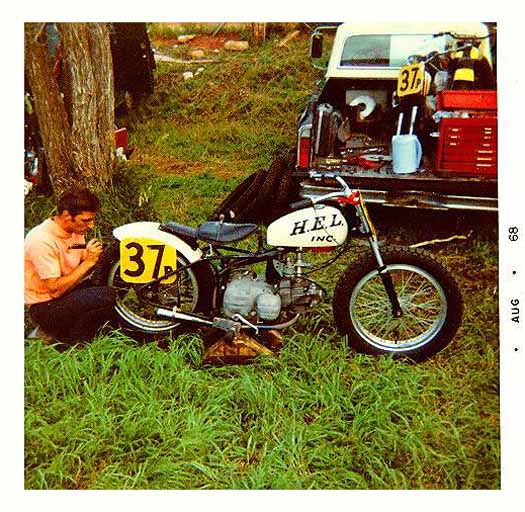
Darrell Doval's CR at
Sturgis. Darrell
was one of the first
racers to experiment w/ larger Carbs on the
CR Engine. He installed
an 1-3/8" Amal GP Carb that I believe came off a
Matchless
and used
it quite Successfully. Darrell must have known
something in those
early days as the Last CR Engines had 35mm(1-3/8")
Delorto Carbs on
them.
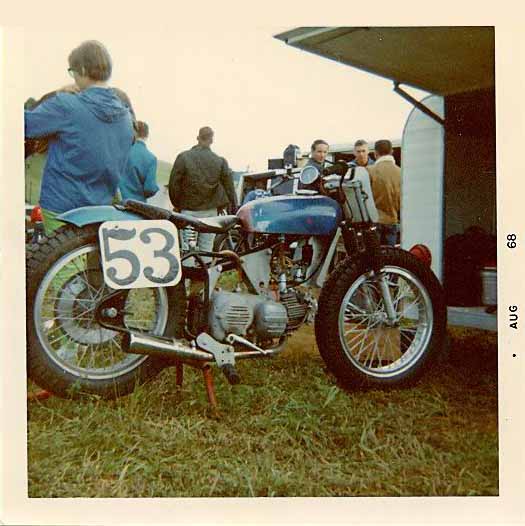
On your Sprint page, you have a photo taken at Sturgis in 1968 of National #53. That was my uncle Al Mathwig.
Al passed away this past January. I was wondering if you might be able to add his name below the photo.
Thanks, Cory
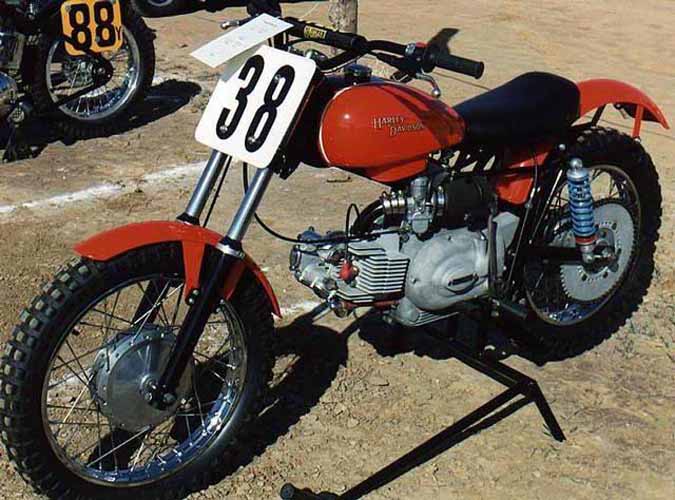
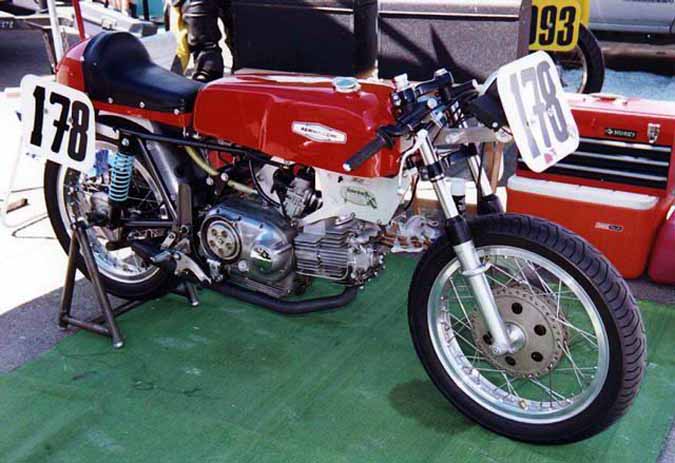
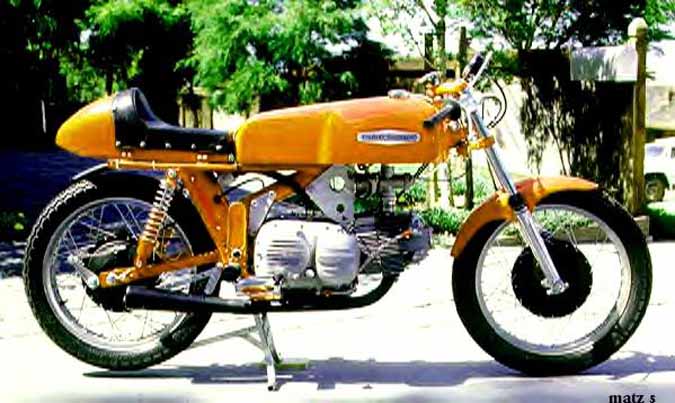
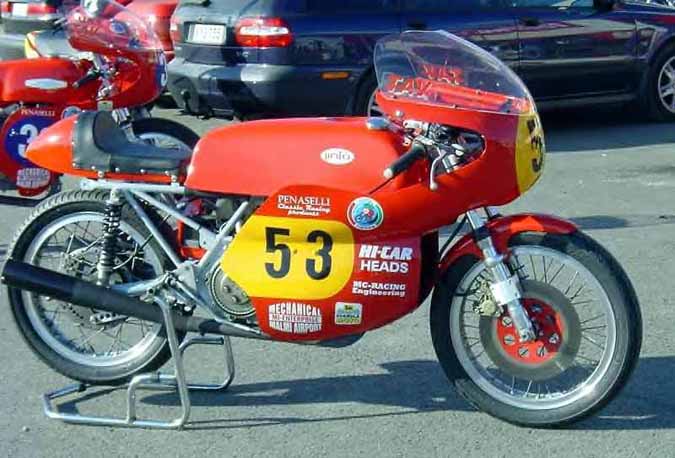
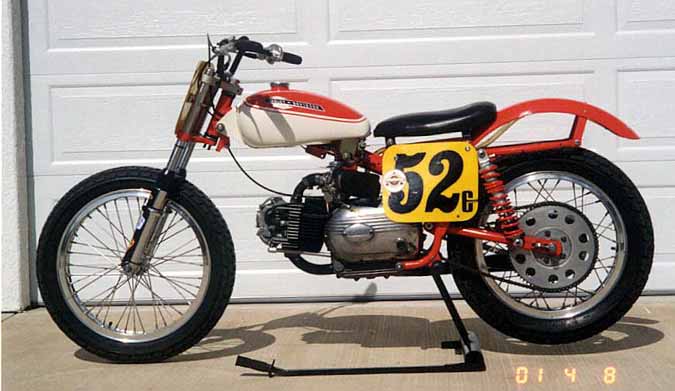
AHRMA racer Dave Cheneys CRS vft
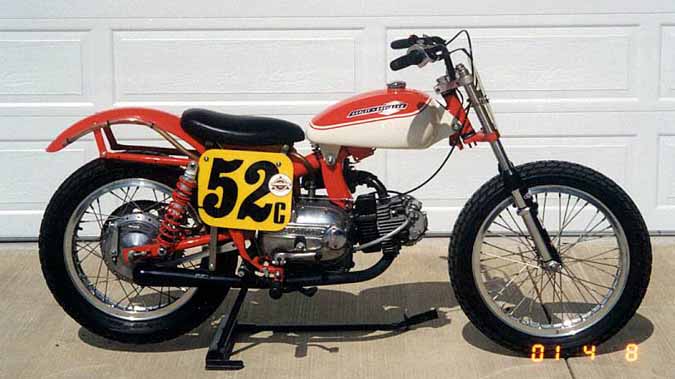
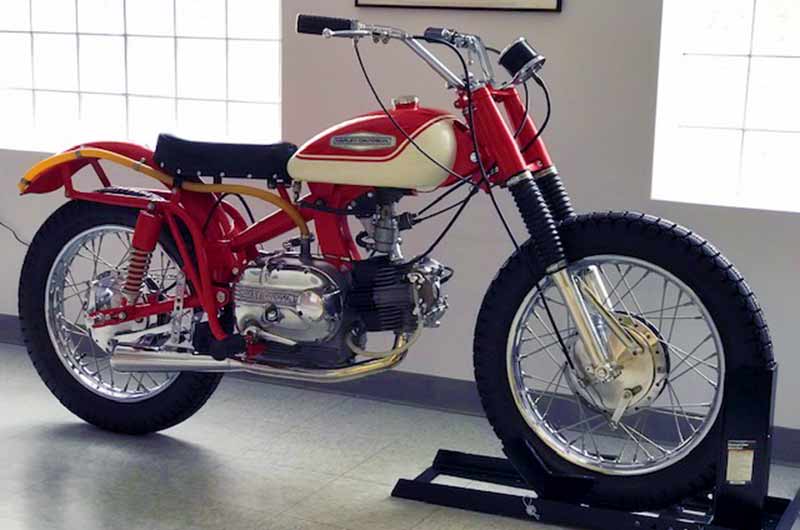
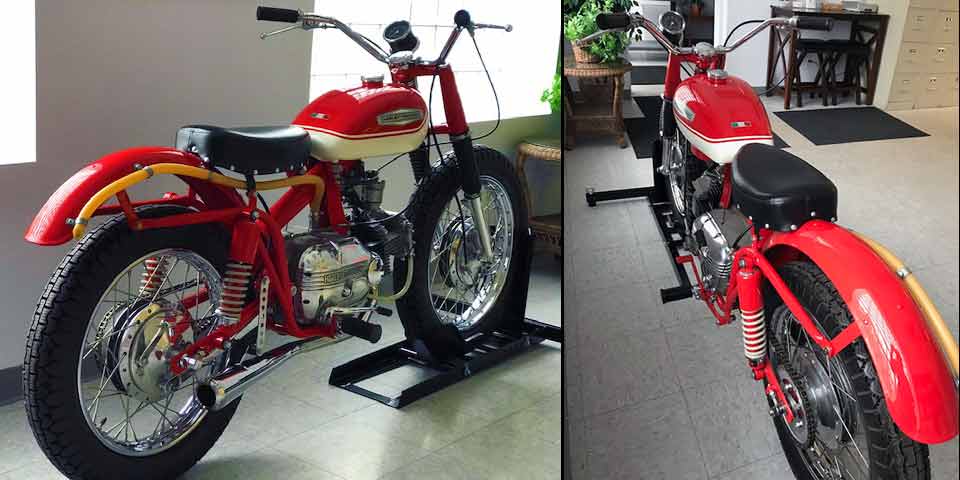
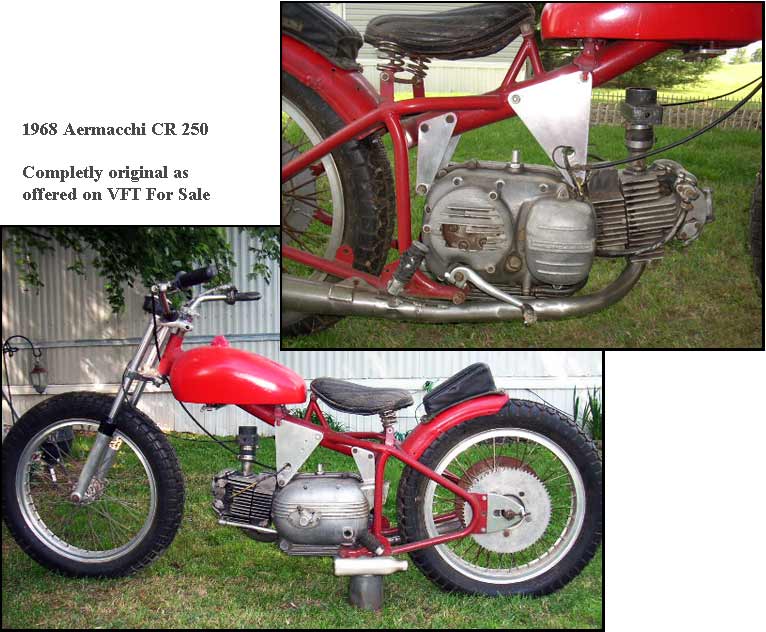
Numbers matching 1966 Harley Sprint CRS factory production race bike. These bikes are very rare, only 350 produced in 1966.
Bike is in pristine condition. Everything correct. Was for sale on VFT for sale page
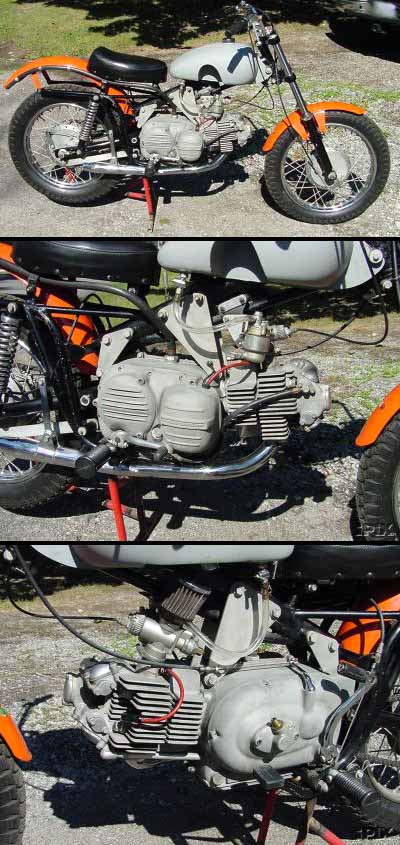
This is a barely used 1970 Harley Davidson 350
c.c.
Sprint ERS. This is one of 102 ERS models built in 1970.
They were built for racing for four years from
1968-72
for a total production of 572 units.
This bike was sold
on
Ebay for $5700 vft
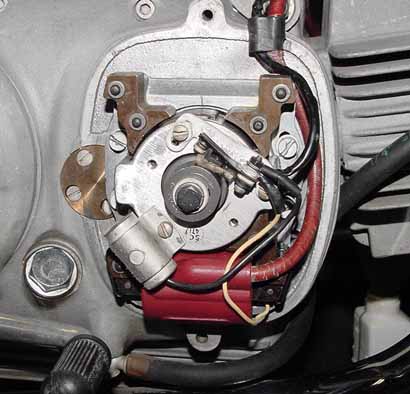
Mag innards of ERS
Readers Rides
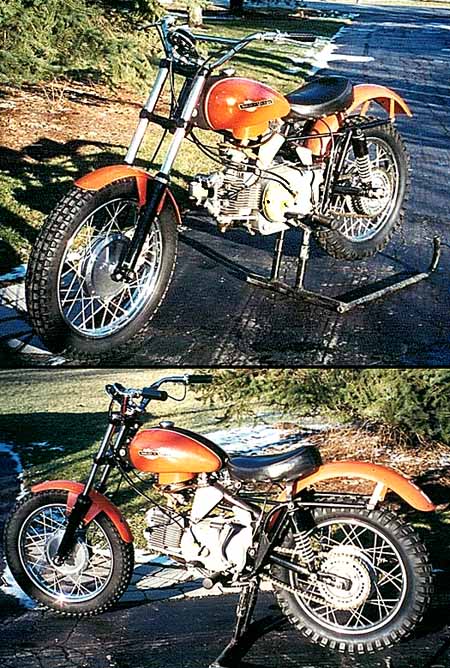
I have and ERS that is all original, even
including
the tires. Hardly ever used.
Was traded in for a new sportster several years ago.
Been in my garage/shop since.
Bill Thomas
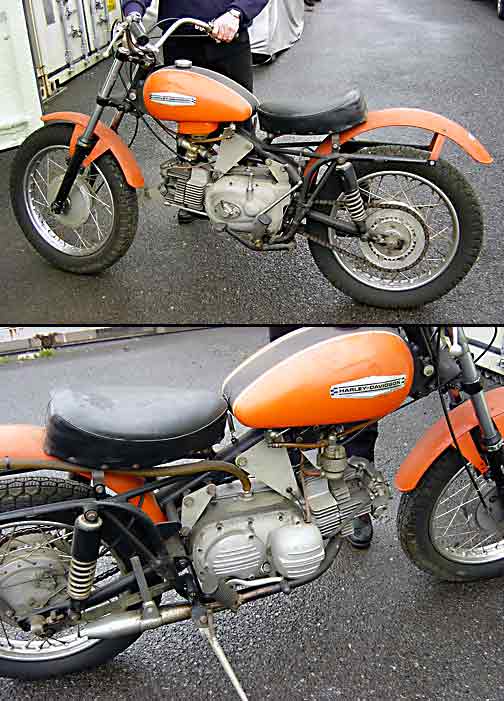
The Aermacchi Harley-Davidson ERS flat-tracker was produced from 1968 to 1972,
with a total of 572 bikes built. Annual production was as follows:
1968 - 120, 1969 - 250, 1970 - 102, 1971 - 50, 1972 – 50.
Based on the chassis number, this bike is one of the original 1968 models.
It is all original and has never been modified or restored.
It has an Ala d'Oro 350cc engine with Bendix magneto and a four-speed close ratio box.
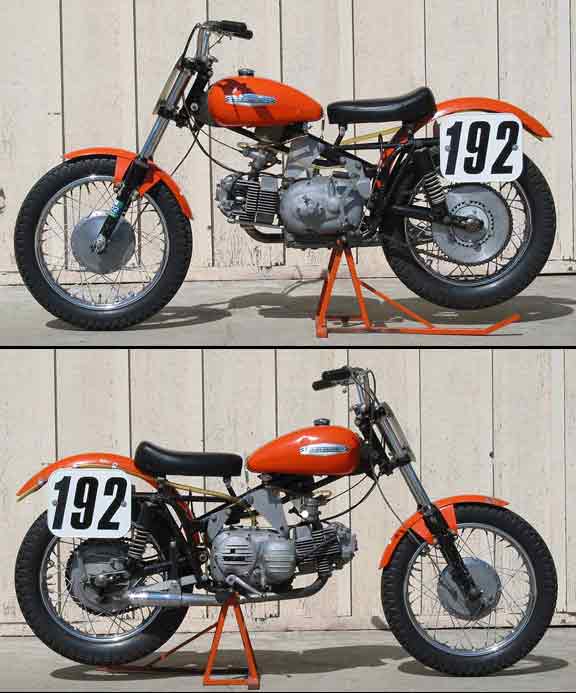
1969 ERS
Saw your web site and thought I would send a couple of photos of my '69 ERS.
It's all original with no restoration with the exception of the recovered seat.
I raced it once in a vintage flat track event in Ventura, Ca. some years ago.
Tried to follow Jim McMurren around, but that didn't work to well! Regards, Randy Reed
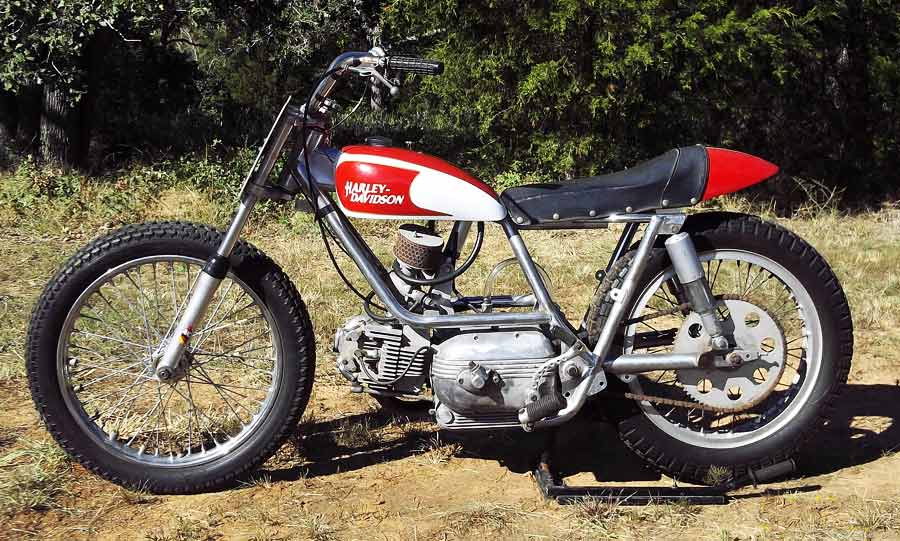
Shotgun Winchester's Sprint

RR250
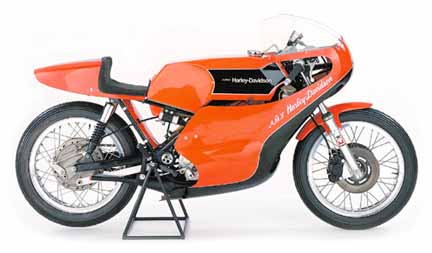
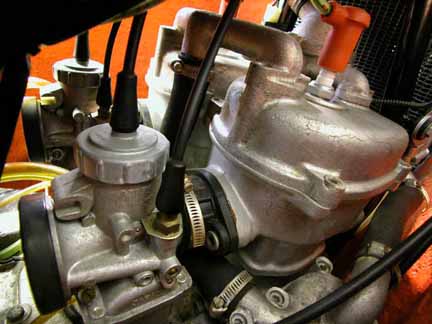
If the Grand Prix road-racing record books came with footnotes, you’d see a reference to this Italian-built motorcycle next to the only GP titles ever credited to Harley-Davidson. Yes, you read that right. Back in the 1970s, Harley-Davidson actually was a force in international road racing, winning the 250cc class three years in a row and topping the 350cc class once. How did a company known for big, slow-revving, four-stroke V-twins rack up such an impressive streak in a form of competition dominated by small, hard-running two-strokes? In a word, Aermacchi. When small, technically sophisticated machines from Japan began flowing into the United States in the 1960s, Harley responded by buying a 50 percent stake in the Italian motorcycle firm Aermacchi, spun off just a few years earlier from airplane-maker Aeronatica Macchia. Aermacchi’s trademark 250cc four-stroke singles, with one horizontal cylinder sticking straight forward, formed the basis of the Harley Sprint line of 250s and 350s. Aermacchi officials, who in the Italian tradition believed that race performance was integral to success, continued to contest the Grands Prix using two-strokes under their own company name. Then, in 1973, the same machines were rebadged as Harley-Davidsons. A year later, factory rider Walter Villa began a string of three 250cc championships. In that final championship year, 1976, Villa also topped the 350cc class on a bored-out version of the same bike. Early air-cooled versions made about 50 horsepower at 10,000 rpm. Later water-cooled bikes like this one pumped out 58 horsepower at 12,000 rpm. It’s hard to say that all this grand-prix success had any positive impact on the parent company, which was staggering through its years of ownership by the AMF conglomerate. Still, the GP race program continued through 1978. A few years later, the Aermacchi plant in northern Italy was sold to the new Cagiva brand, which continues to build motorcycles there today. As a race machine, the RR250 was built in extremely limited numbers, which makes any surviving examples, like this 1975 model, owned by Benjy Steele of Huntington, West Virginia, pretty hard to find. But this particular RR250, now on display in the Motorcycle Hall of Fame Museum at AMA headquarters in Pickerington, Ohio, is even rarer: It’s never been started since it left the factory. © 2003, AmericanMotorcyclistAssociation |
Road Race Aermacchis
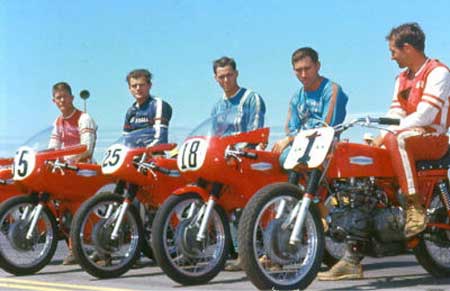
The Old Screaming Eagle Race Team
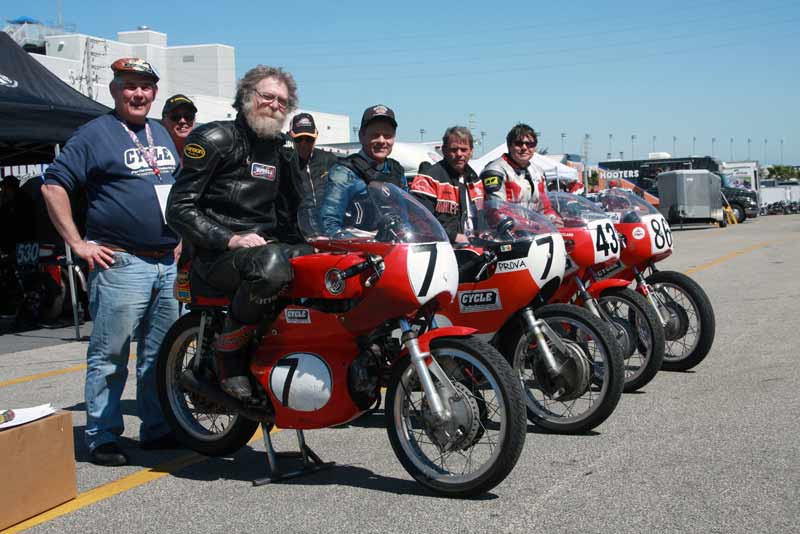
BALDIN' EAGLE RACE TEAM sponsored by Cycle Performance Products, Inc., 2724 Spring Garden Rd., Winston-Salem, NC
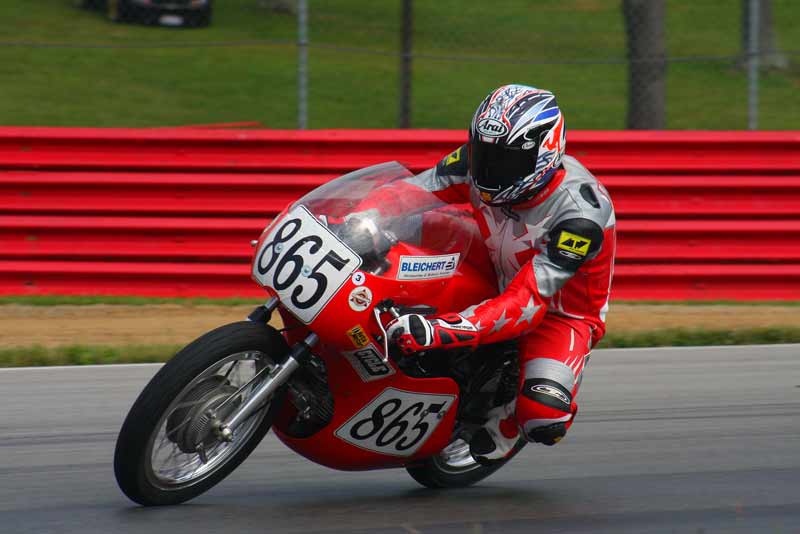
CRTT 250
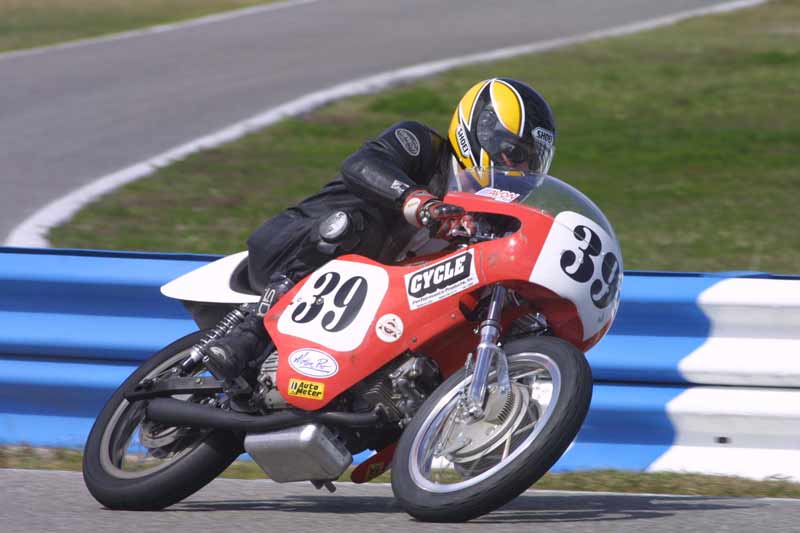
ERTT 350
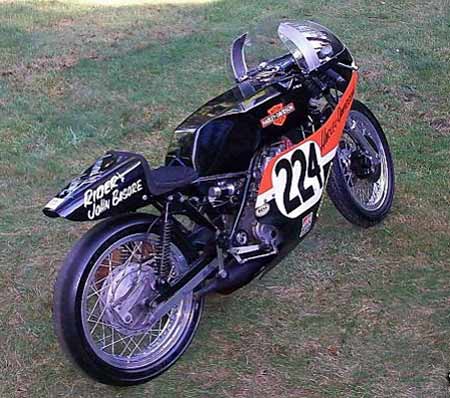
RR 250

Parts Catalog PDF's supplied by
http://sunnymeadcycles.com/AermacchiHD.html
CRTT & CRS Parts Catalog 1965 pdf
1969-70 ERS-Sprint Parts Catalog PDF
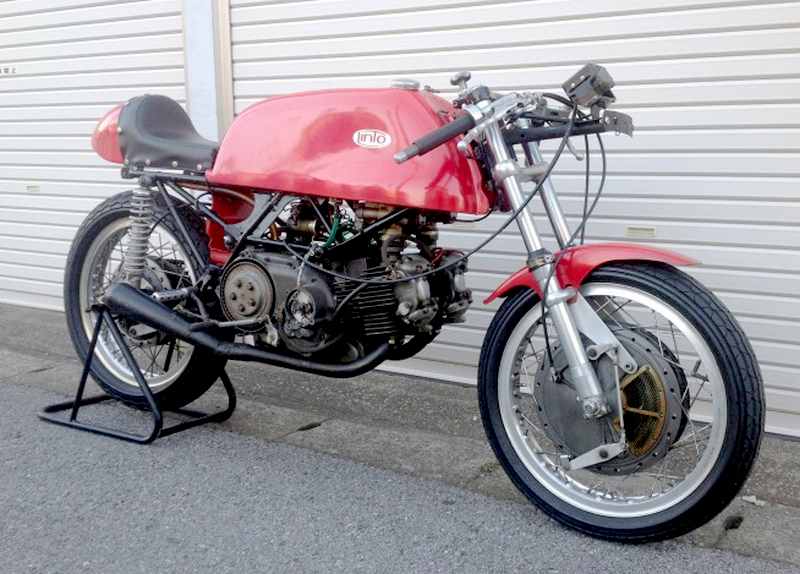
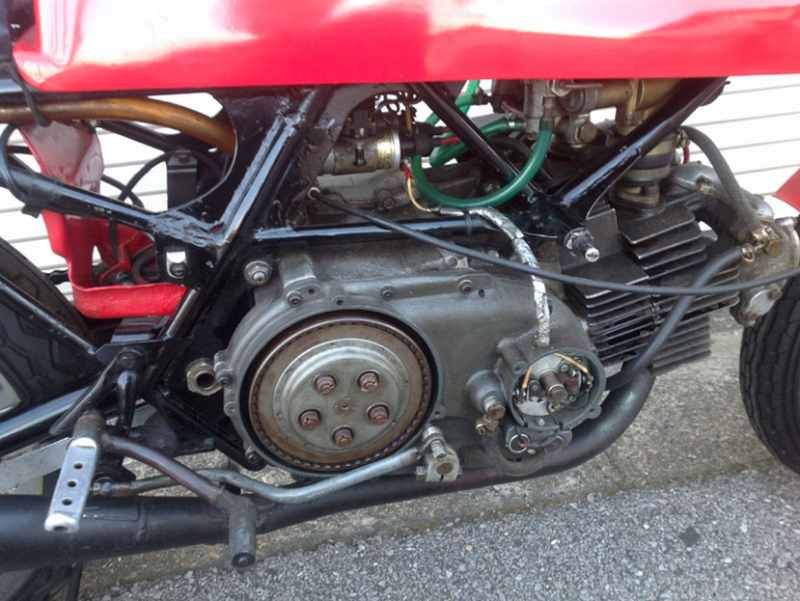
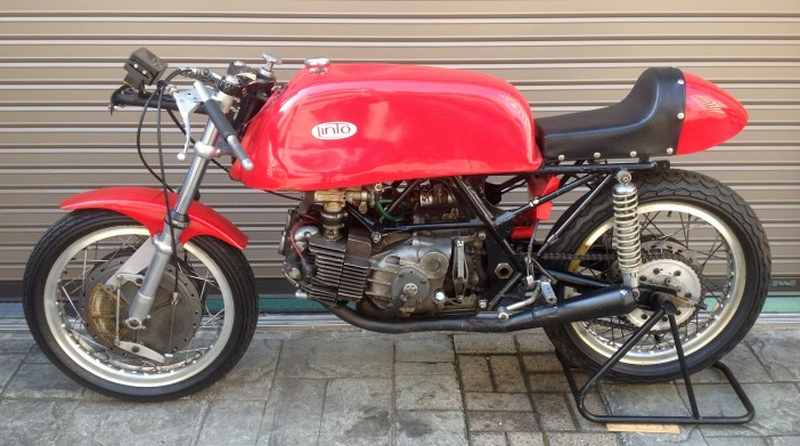
This Linto is on display at Barber Vintage Motorcycle Museum in 2018
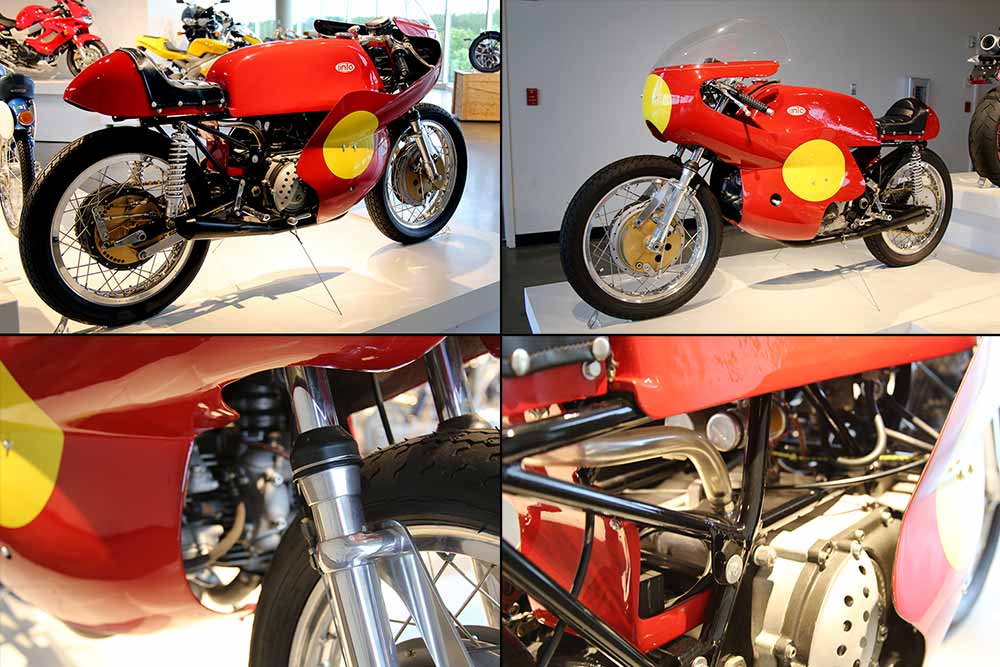
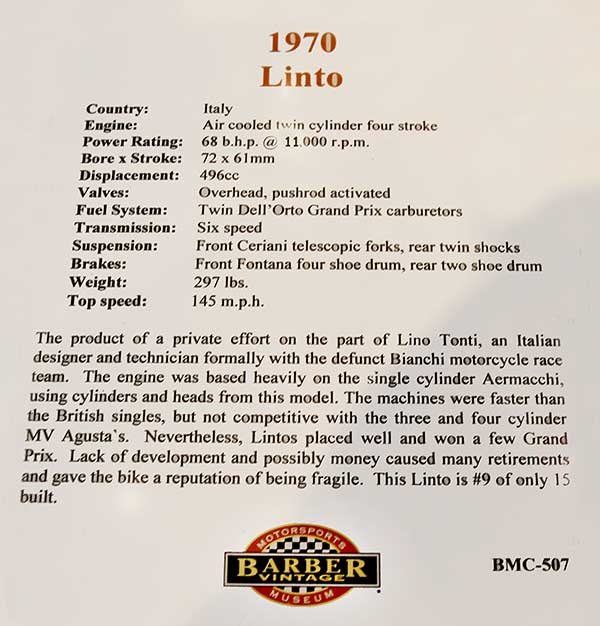
Linto 500 Twin
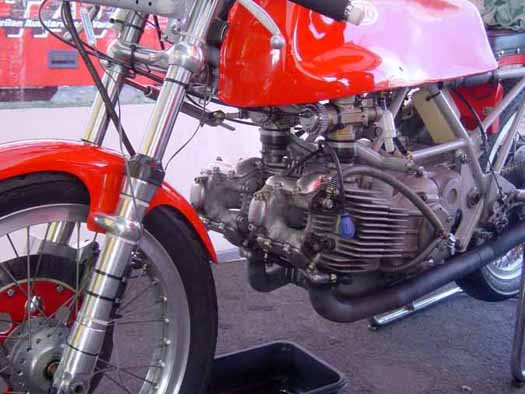
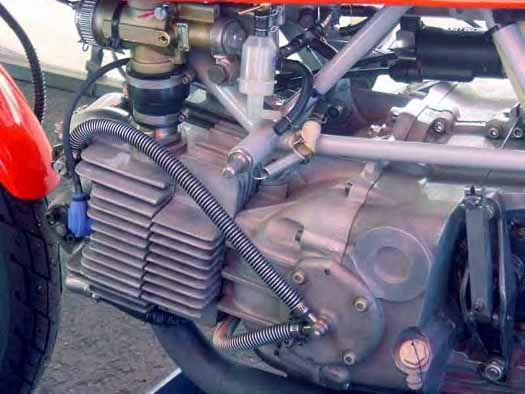
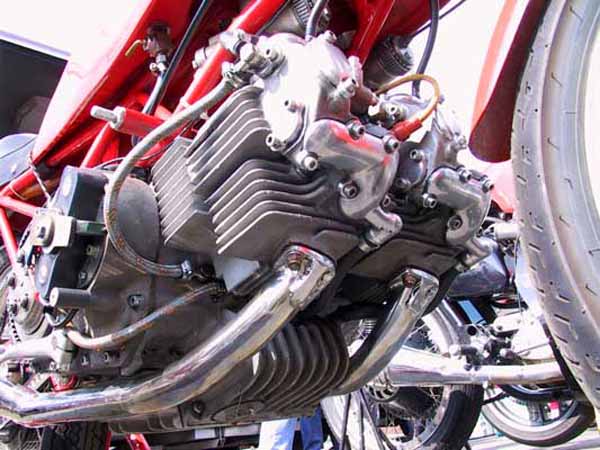
Classic Bike Magazine
August 1997 "Siamese Twin" Patrick Godet's restoration of a 1969 Linto
Lino Tonti, a
veteran of
Aermacchi,
Bianchi and Gilera, designed a race bike called the "Linto" just before
he was
hired at Moto Guzzi. The
engine
in the Linto was essentially two Aermacchi top ends grafted onto a
single
crankcase.
A Linto racing
motorcycle
placed
second in the final World 500 GP standings in 1969
1) Giacomo Agostini (MV
Agusta)
2) Gyulay Marzowszky (Linto) 3) Freddy Nash (Norton)
Dick Linton raced a
Linto
at
the Classic Senior Isle of Man TT in the mid Eighties
and raced Aermacchis in the
Junior class during the Seventies.
He is now a supplier of
Aermacchi
parts in England
Aermacchi: Harley-Davidson Motorcycles
by Mick Walker
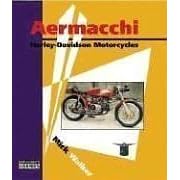
Aermacchi Book preview by Google
Text
below was copied from motocorse.com site and translated by google.
The related photos are no longer available - vft
The History of the Linto(09 January 2002)of Steve Ellis (you see didascalia to deep
page) Next to the end of the 1968 Prewharves small series of the motion constructed on ordinazione at the price of 2.300 dollars, highest thought to put in production one for the age. They came initially ordered eight motion from part of private teams, and two to superread Linto official came constructed for Alberto Pagani and the Australian ace Jack Findlay. 1969 The motion that competed in 1969 but showed one great mechanical embrittlement. One of the greater ones was the breach of the primary transmission, and in spite of the several modifications and the various materials it employs the problem to you was not resolved because had to a planning error. An other indeed serious problem was constituted from the vibrations, that they succeeded to quite damage the papers motor and the weldings of the chassis, and that year the planner Tonti Linen passed to the Guzzi Motion, leaving Prewharves and its staff to try to resolve the problems of the motion. The motion in any case was fastest, but equally difficult to guide: usual Linto pilot always ended on the podio, but the others difficultly arrived to the end of the contest… The motion official suffered from these problems analogous to those destined ones to tries to you, in spite of that Alberto (Pagani, ndt) gained in Italy giving to the Linto its only Victoria in a Grand Prix, while Jack Findlay conquered a third party place in the GP of the Germany the West. That year Gyula Marsovszky the Championship of the World, and Steve concluded Ellis finished with a diamond second place to the sixth place. “Hard” the New Zealander Keith Turner won to the Mans and the Mettet Internationals, where its motion cronometrata to 160mph (nearly 290 km/h!) on the rectilinear Mulsane, 20mph faster of the Norton and Matchless. To half of 1970 the plan to Varese was closed, and the teams and try to you will sell the motion. In the 500 the Japanese to two times had arrived, and the four times were left behind, beautifulst beasts that rest in Hush… R.I.P. The end |
Linto was offered for sale byH&H Classics Limited The Motor House Lyncastle Road Warrington Cheshire. WA4 4SN United KingdomEvery
auction seems to have at least one lot that might take the bidding sky
high, or disappoint with a non-sale, and this 1969 Linto 500cc Grand
Prix Racer will play that role in the War Museum sale |
http://www.motocorse.com/news/epoca/1150_La_storia_della_Linto.php
http://www.cybermotorcycle.com/euro/brands/linto.htm
http://ymedc.introweb.nl/en/archive/scooter/scooter.shtml#
Did Anyone ever see a Linto engine in a Flat Tracker?
If you have any
interesting
CR Sprint photos or tech info, send-um! vft
Aermacchi web sites
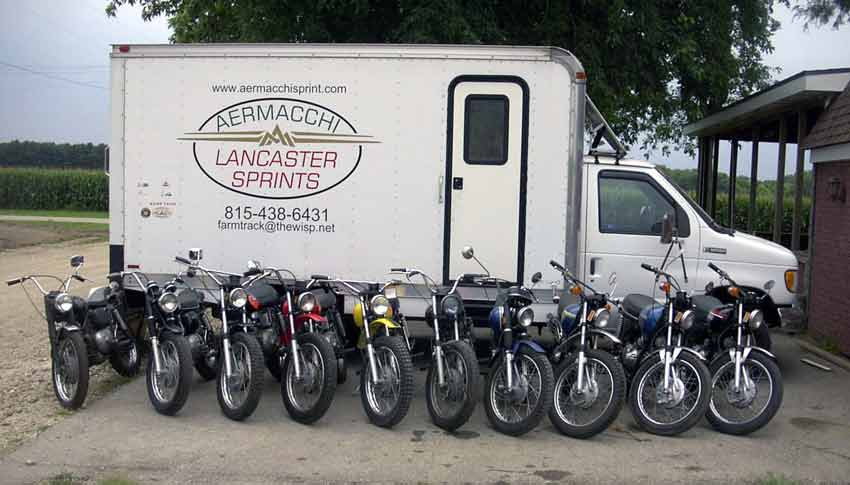
Ron Lancasters site
http://www.aermacchisprint.com
http://www.scribd.com/doc/25970231/The-Harley-Davidson-Sprint-Story
web site by Menalco Solis
https://www.msolisvintagemotorcycle.com/cr
https://ridermagazine.com/2018/05/17/retrospective-1961-1968-harley-davidson-250-sprint/
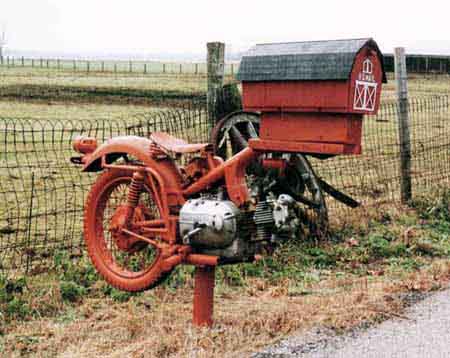
The best use of a H-D Sprint?
https://www.kerstingscycle.com/visit-our--museum
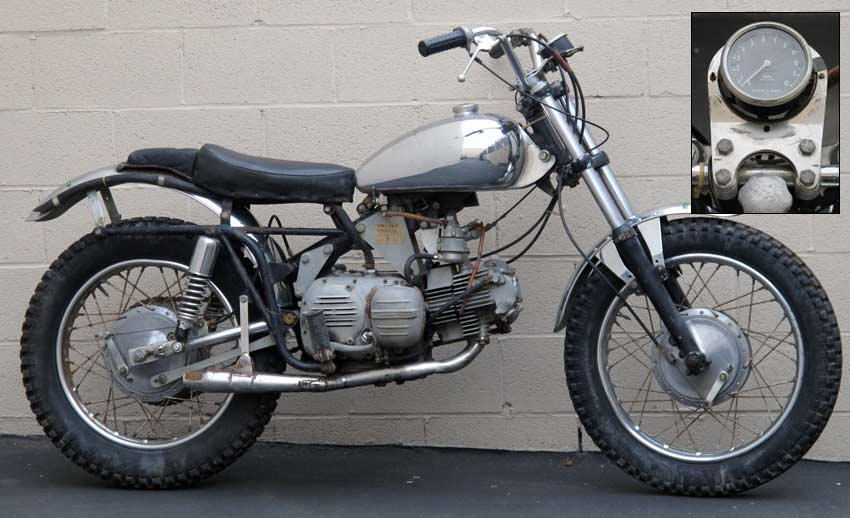
1968 Aermacchi Harley-Davidson Sprint CRS 250cc racer
|
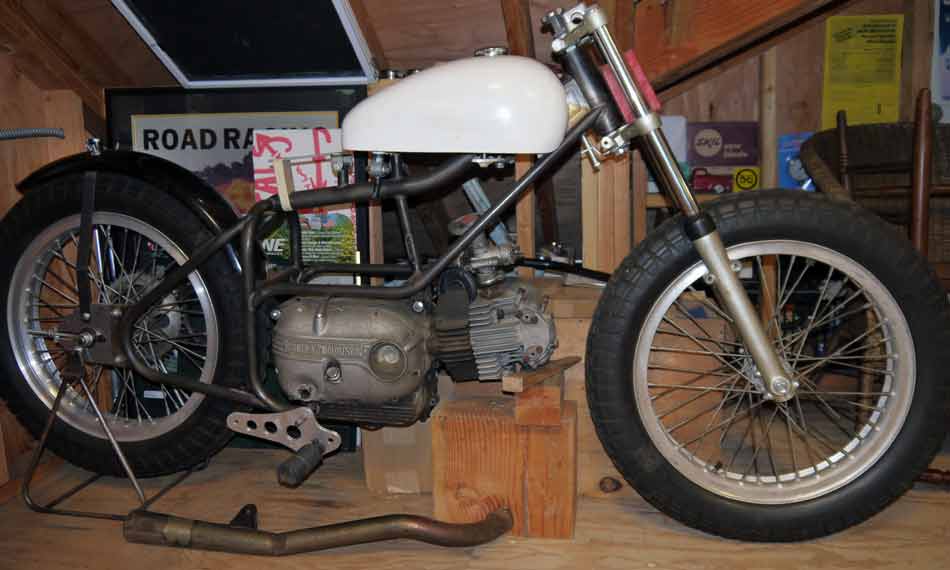
Harley Sprint, Sonic-weld frame, 65 'CR' motor with 65H
cases, Harley wheels, Ceriani forks and fiberglass tank.
Also have box of parts: new crank pin and rollers, piston, valves and springs, gaskets, magneto, etc etc..
Was for sale February 2013 on VFT
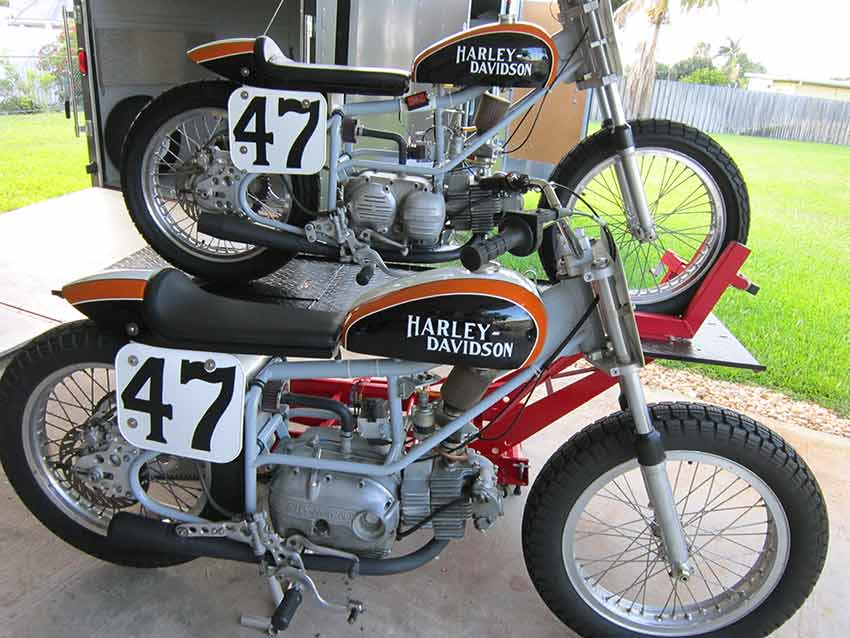
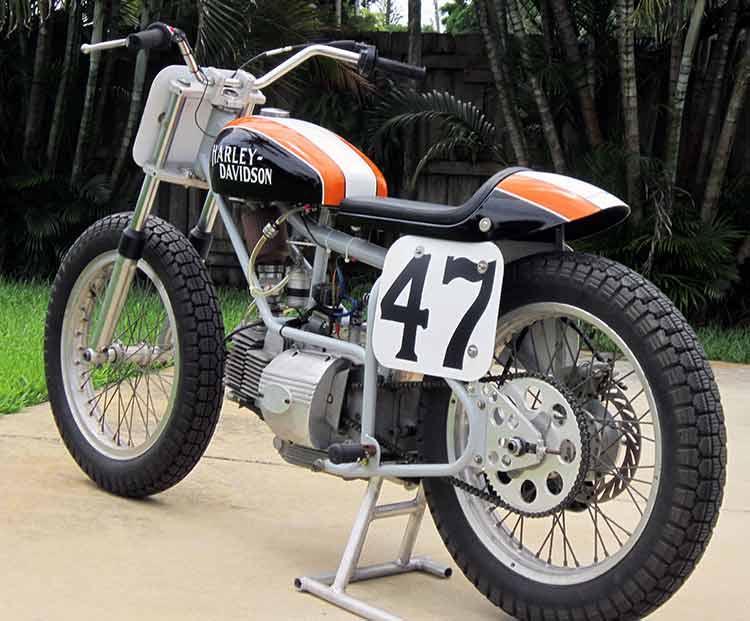
Charlie Seale's Sprints were for sale on VFT
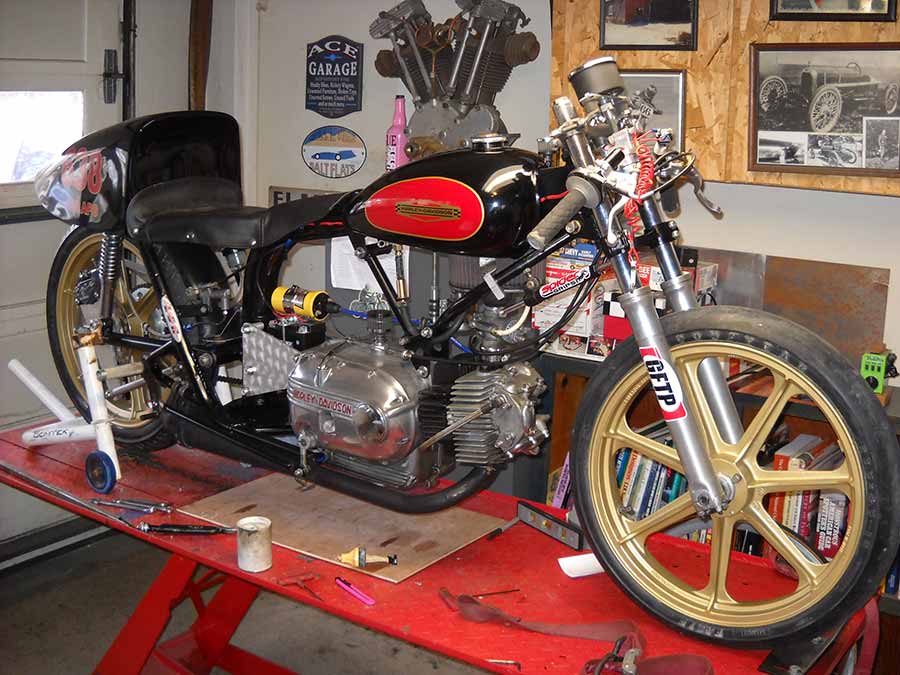
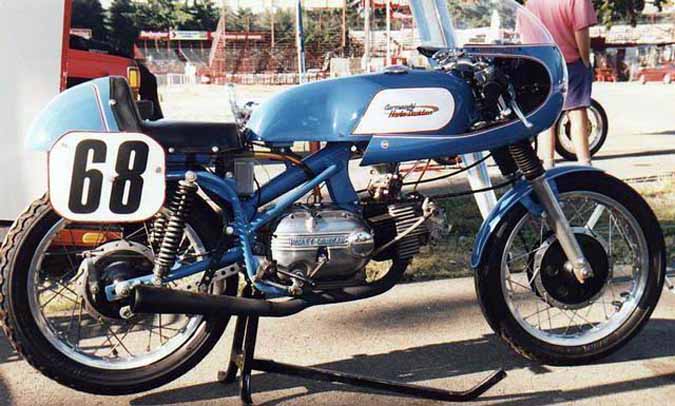
Hi Dennis, Finally got around to looking at the "Sprints" section and thought you might like to post this one. It's the Kerber/Doerfler "Oregon Sprint" that ran at El Mirage dry lake in 2012 and did not set a record. (ran 99 on a 100 mph record) but you have to admit, it was pretty. Chris Kerber/Doerflers (also the owner and long time racer of the number 68 road racer in "Sprints") 250 CRTT engine. My chassis which has also held my 500 Triumph and holds Bonneville record in 500 pushrod gas. Thanks, Martin Newegg. |
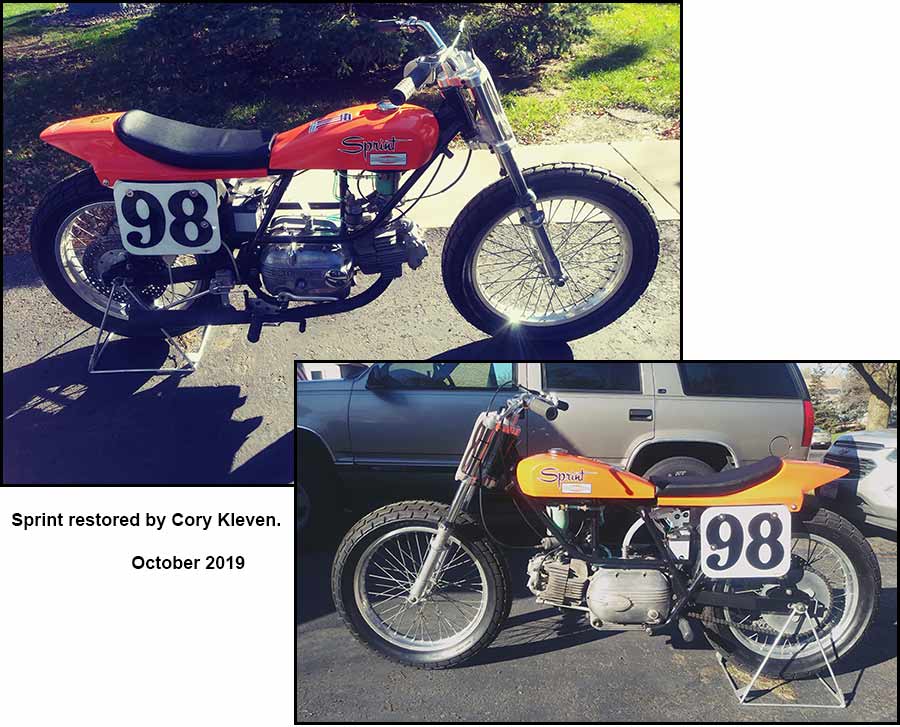
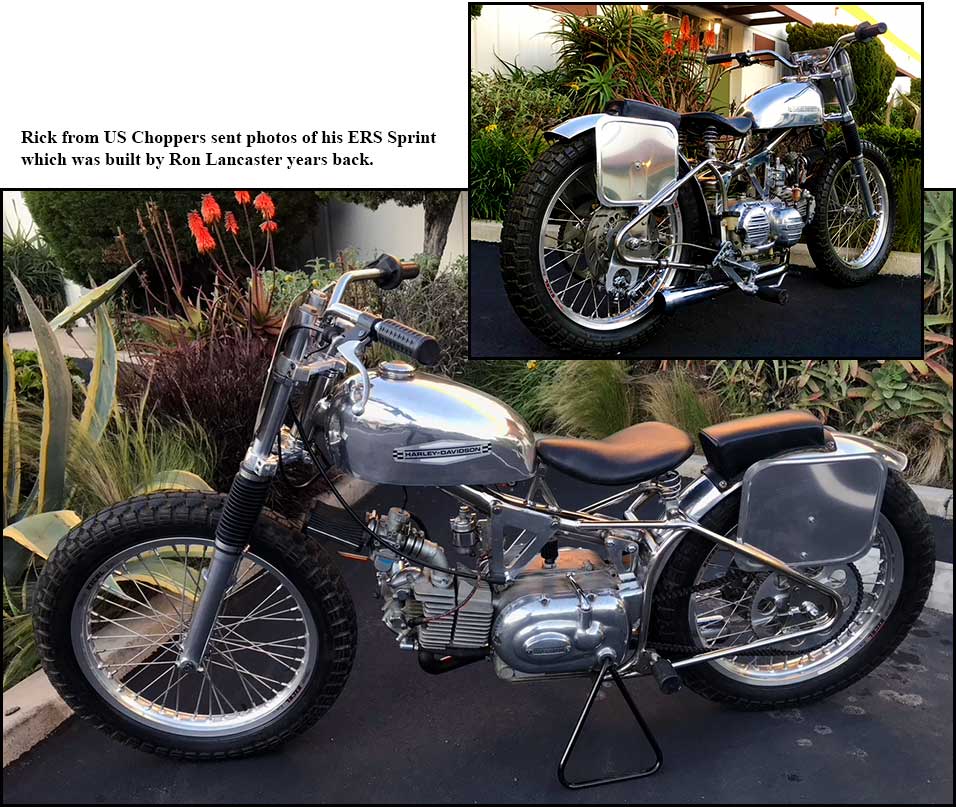
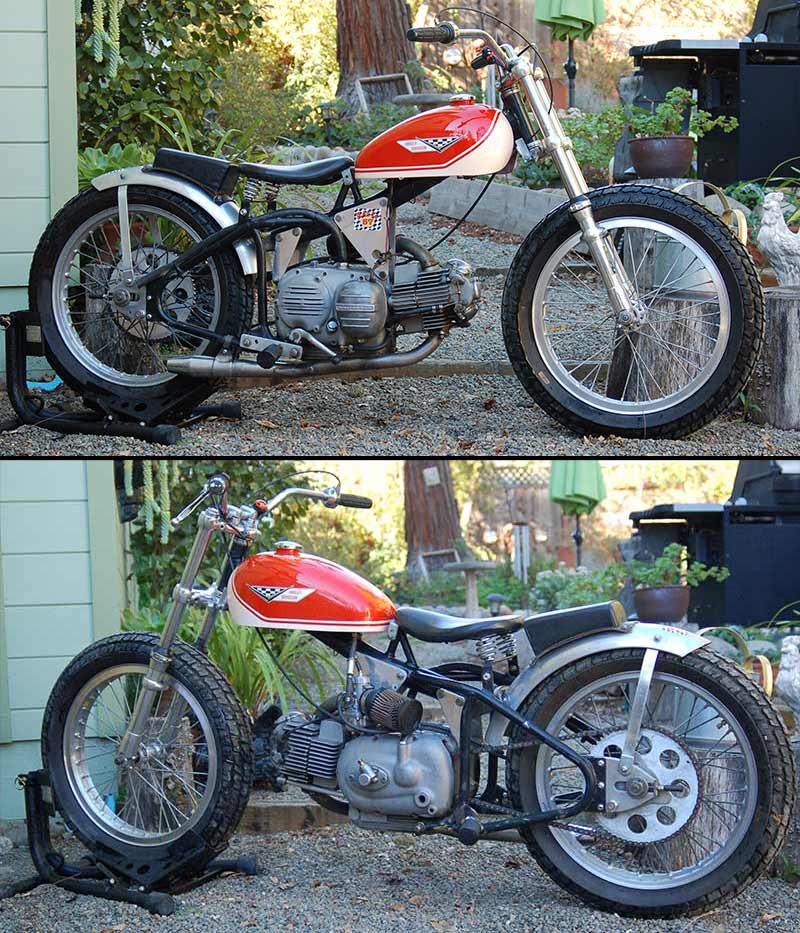
This 1971 Harley Davidson Aermacchi 350 ERS Sprint factory race bike was for sale on vft.org.
The motor is #33 of 50 total ERS race engines produced by Harley Davidson in 1971.
Factory rigid frame with aluminum axle plates and motor mounts.
Ceriani road race forks and triples. Desirable bubble case Magneto.
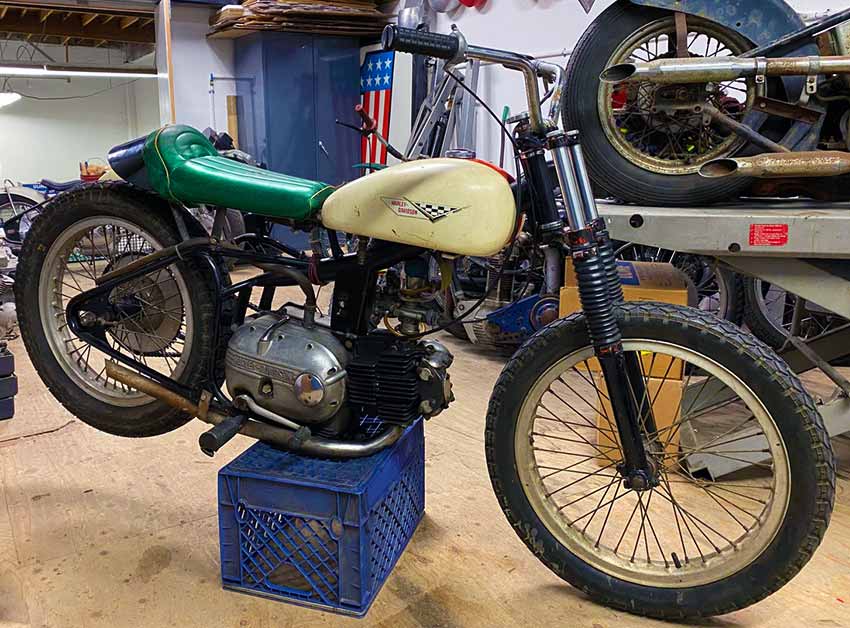
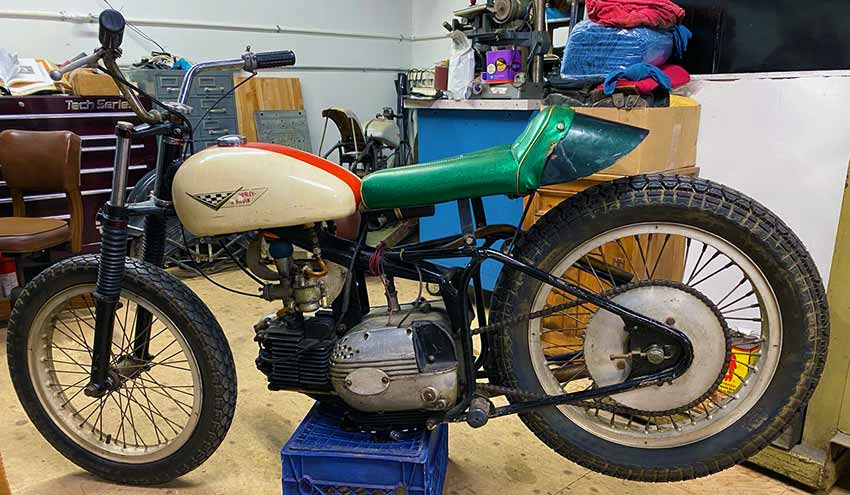
1964 Harley Davidson Aermacchi Sprint CR dirt tracker. Real deal from
the factory in Italy, this is a genuine CR in original condition. Only
135 made over the 3 years they made them 64, 65, 66. 50 made in 1964
and this is the 4th CR ever to be made in the very first year of
production. It is magneto (see picture of points cover removed). It has
the factory chassis and steel KR quick change wheels as they came-
nothing has been put together - this is as period correct as you can
find down to the cool original Flanders bars. Rick - uschopper
|